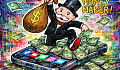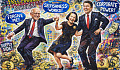

우리는 베를린 장벽이 무너지고 소련이 붕괴된 1991년에 냉전이 끝났다고 스스로에게 말하곤 합니다. 하지만 우리는 틀렸습니다. 냉전은 끝나지 않았습니다. 오히려 더욱 확산되었습니다. 철의 장막은 무너지지 않았습니다. 오히려 기업화되었습니다. 우리가 지금 겪고 있는 일은 그 갈등의 여파가 아니라, 마지막 막입니다. 감시 국가, 선전 기계, 정부와 민간 권력의 결합은 공산주의가 무너졌을 때 사라진 것이 아닙니다. 오히려 민영화되고, 무기화되어 우리에게 자유라는 이름으로 되팔렸습니다.
이 기사에서
- How Johnson's silence on Nixon's treason taught America that truth is optional
- The moment Nixon rewrote money itself to serve political power
- How corporate America adopted CIA tactics to conquer democracy from within
- Why Reagan didn't defeat the Soviet system but replicated it in market form
- How Putin and Trump both weaponized the chaos we unleashed on Russia
냉전은 결코 끝나지 않았다. 단지 기업화되었을 뿐이다.
Robert Jennings, InnerSelf.comThe West won the war but lost the peace. We thought we'd defeated totalitarianism, but we'd only changed its branding. The Soviet Union built a system that ran on fear, control, and the suppression of truth. When it collapsed, we didn't dismantle that system. We inherited it. We applied its methods to capitalism. And now, sixty years into this experiment, we're discovering what the Soviets learned the hard way: you can't build a sustainable civilization on lies.
This isn't ancient history. It's the architecture of the present. Every authoritarian move we see today—from Putin's hybrid warfare to Trump's reality-bending populism—traces back to a series of choices America made starting in the 1960s. Choices where power mattered more than principle. Where winning mattered more than truth. Where the temporary political advantage of today was worth sacrificing the institutional integrity of tomorrow.
The slippery slope wasn't a metaphor. It was a construction project. And we can trace every step.
The First Betrayal
In 1964, Lyndon Johnson did something rare in American politics: he chose moral courage over political expedience. He pushed through the Civil Rights Act, knowing it would cost his party the South for a generation. He was right on both counts. It was the last time an American president would sacrifice that much political capital for a principle.

Four years later, he made the opposite choice. Johnson knew that Richard Nixon had committed treason. Not the rhetorical kind we throw around in partisan food fights, but the actual constitutional kind. Nixon's team secretly contacted the South Vietnamese government in the fall of 1968 and convinced them to boycott Johnson's peace talks in Paris. The message was clear: wait for Nixon to win, and you'll get a better deal.
It worked. The peace talks collapsed. Nixon won. And the war that might have ended in 1968 dragged on for seven more years, killing tens of thousands of additional Americans and hundreds of thousands more Vietnamese.
Johnson knew. He had the evidence. The FBI had been monitoring Nixon's back channel through Anna Chennault, and they'd intercepted enough to prove what happened. But Johnson made a calculation: exposing Nixon would reveal that the FBI had been surveilling the opposition candidate. It would look like he was using intelligence agencies to swing an election. It would damage faith in American institutions.
So he stayed silent. For the good of the country, he said. And in staying silent, he taught the country something far more dangerous than anything Nixon's treason could have done: he taught us that truth is optional. That some crimes are too big to prosecute. That power, once you have enough of it, makes you immune to consequence.
Nixon learned the lesson well. If you can get away with treason, what can't you get away with?
기만의 시대
Nixon didn't just lie. That's too simple. He weaponized the presidency against reality itself. This wasn't economic theory. It was raw power. Nixon had pressured Fed Chairman Arthur Burns to keep interest rates low heading into the 1972 election, juicing the economy for political gain. When inflation predictably followed, Nixon blamed everyone but himself—unions, corporations, Democrats, the weather. He imposed wage and price controls, a move so radical that even his own advisors were stunned.
The man who once declared "we are all Keynesians now" had discovered something more useful than Keynesian economics: Keynesian politics. You could manipulate the money supply, the interest rates, and the public's perception of economic reality to serve your immediate political needs. And if it created problems down the road—inflation, debt, instability—well, that would be someone else's presidency.
Watergate ended Nixon's term but not his legacy. We remember Watergate as a scandal about a break-in and a cover-up. We should not forget it, as the moment we learned that presidents now assumed they could do anything, and the only crime was getting caught. Nixon's real innovation wasn't burglary. It was teaching future presidents that the tools of covert warfare—surveillance, deception, psychological operations—could be turned inward, against the American people themselves.
Economics had replaced morality as the lever of control. And truth had learned to bend to power.
The Corporate Counterrevolution
While Nixon was manipulating money and covering up crimes, corporate America was quietly planning a revolution. In 1971, a tobacco lawyer named Lewis Powell wrote a confidential memo to the U.S. Chamber of Commerce. Its title was bland—"Attack on American Free Enterprise System"—but its message was electric: business was under assault from activists, intellectuals, and politicians, and it needed to fight back.
Not with better products or services. With ideology. With propaganda. With the same kind of strategic psychological operations that the CIA had perfected during the Cold War. Powell's memo became the blueprint for a corporate takeover of American democracy that would unfold over the next five decades.
The timing was perfect. The OPEC oil embargo in 1973 triggered stagflation—a nightmare combination of stagnant growth and rising prices that Keynesian economics couldn't explain and didn't know how to fix. Into that void stepped a new ideology: neoliberalism. Markets weren't just efficient; they were moral. Government wasn't just ineffective; it was tyrannical. Regulation wasn't just costly; it was a threat to freedom itself.
It was brilliant because it was half true. The government had become bloated and inefficient in places. Regulation did sometimes protect incumbents more than consumers. But the corporate counterrevolution wasn't interested in reform. It was interested in conquest. And it learned from the masters.
The CIA had spent decades perfecting the art of psychological warfare: how to shape perception, control narratives, and manufacture consent in foreign populations. Corporate America took those tools and turned them on the American public. Think tanks that sounded academic but were funded by industries. Grassroots movements that were actually astroturf, seeded and watered by corporate money. News that looked like journalism but was carefully crafted messaging.
By 1980, corporate ideology had done what the Soviets never could: convince Americans that their own government was the enemy. That collective action was oppression. That the invisible hand of the market was the only force that could save us. The irony was perfect: we'd spent forty years fighting a totalitarian system that claimed markets couldn't work, and we'd replaced it with a market system that operated like totalitarianism.
The Great Reprogramming
Ronald Reagan didn't invent neoliberalism, but he sold it better than anyone else could have. He had the voice, the optimism, the grandfatherly warmth that made radical change feel like common sense. When he said "government is not the solution to our problem; government is the problem," millions of Americans nodded along, forgetting that government had built the interstate highways they drove on, the schools their kids attended, the Social Security checks their parents depended on, and the military that supposedly won the Cold War.
Reagan's revolution was marketed as freedom: lower taxes, less regulation, more individual choice. What it actually delivered was a different kind of control. Unions were busted. The air traffic controllers who dared to strike were fired and banned from federal employment for life, sending a message to every other worker in America: you are replaceable, and your collective power is an illusion.
Deregulation didn't free markets; it freed corporations from accountability. The invisible hand became the iron fist, and it wore a flag pin on its lapel while it tightened around workers' throats. Wealth began its long migration upward, a transfer that continues to this day. But this wasn't framed as theft. It was called an incentive. Opportunity. The American Dream.
When the Soviet Union finally collapsed in 1991, Reagan's disciples claimed total victory. See? Freedom won. Markets won. Democracy won. What they didn't mention was that we hadn't defeated the Soviet system—we'd replicated it in market form. Top-down control. Concentration of power. Propaganda disguised as news. The only difference was that instead of the Politburo, we had the Fortune 500. Instead of the KGB, we had corporate surveillance. Instead of Five-Year Plans, we had quarterly earnings reports that forced companies to sacrifice long-term health for short-term profit.
Capitalism had absorbed propaganda and rebranded it as marketing. The sophisticated machinery of consent that the Soviets had used to maintain their empire was now selling us everything from soda to presidential candidates. We didn't defeat totalitarianism. We monetized it.
The Neoliberal Boomerang
Here's where the story gets darkly funny, in the way that tragedies are funny when you're far enough away from the blast radius. We won the Cold War and immediately exported our victory to Russia in the form of "shock therapy"—a brutal restructuring that destroyed the Soviet social safety net overnight and told Russians to embrace the market or starve.
What emerged wasn't democracy. It was an oligarchy. A handful of well-connected men grabbed the country's assets in rigged auctions. At the same time, everyone else watched their savings evaporate and their futures disappear. By the late 1990s, Russia was a failed state run by gangsters. And into that chaos stepped a KGB officer named Vladimir Putin.
Putin understood something crucial: the Cold War hadn't been about ideology. It had been about power. And the tools of power—surveillance, propaganda, the weaponization of information—didn't care whether you wrapped them in communism or capitalism. Putin took the chaos we'd created in Russia and weaponized it. He built a state that looked like a democracy but operated like a mafia. He used our own openness against us, funding fringe movements, amplifying divisions, turning our free press into a vector for confusion.
And then came Trump. A man who'd spent decades monetizing chaos, selling his name to anyone with money, declaring bankruptcy when it suited him, and stiffing contractors while claiming to be a genius businessman. Trump wasn't an aberration. He was the logical endpoint of everything we'd been building since Nixon. A leader who understood that truth was optional, that loyalty mattered more than competence, that spectacle could substitute for substance, and that if you lied loudly enough and often enough, reality itself would bend.
Putin weaponized chaos. Trump monetized it. Both are products of a world where truth, power, and capital have merged into a single force that serves only itself. The sophisticated machinery of the early Cold War—careful, calculated, hidden—has become cartoonish. The covert has become performative. And the system has finally turned on itself, devouring the very societies that created it.
For the first time in human history, the future of collapse is global. Previous local civilizations could fail, and survivors elsewhere would rebuild. Now there's nowhere else. We built a machine that runs on fear, profit, and distraction, and we're all trapped inside it together unless we unite and object.
저자에 관하여
 로버트 제닝스 는 개인에게 힘을 실어주고 더욱 연결되고 공평한 세상을 육성하는 플랫폼인 InnerSelf.com의 공동 발행인입니다. 미국 해병대와 미국 육군의 베테랑인 로버트는 부동산 및 건설 분야에서 일하는 것부터 아내인 Marie T. Russell과 함께 InnerSelf.com을 구축하는 것까지 다양한 삶의 경험을 바탕으로 삶의 도전에 대한 실용적이고 현실적인 관점을 제시합니다. 1996년에 설립된 InnerSelf.com은 사람들이 자신과 지구를 위해 정보에 입각한 의미 있는 선택을 할 수 있도록 통찰력을 공유합니다. 30년이 넘은 지금도 InnerSelf는 명확성과 힘을 불어넣고 있습니다.
크리에이티브 커먼즈 4.0
이 문서는 크리에이티브 커먼즈 저작자 표시 - 동일 조건 4.0 라이센스로 배포됩니다. 작성자 특성 지정 Robert Jennings, InnerSelf.com. 기사로 돌아 가기 이 문서는 원래의 등장 InnerSelf.com
추천 도서
충격 교리 : 재난 자본주의의 부상
Klein traces how disaster capitalism has exploited crises around the world to impose radical free-market policies, connecting the dots between Cold War tactics and modern economic warfare.
Legacy of Ashes: The History of the CIA
Weiner's definitive history of the CIA reveals how the agency's Cold War tactics evolved into tools that would eventually be turned against American democracy itself.
쇠사슬에있는 민주주의 : 미국을위한 급진파 권리의 은밀한 계획의 깊은 역사
MacLean exposes the decades-long campaign to undermine democracy through radical economic ideology, tracing a direct line from the Powell Memo to today's political reality.
기사 요약
The Cold War never truly ended—its surveillance apparatus, psychological tactics, and authoritarian methods were simply privatized and absorbed into corporate capitalism. From Nixon's economic manipulation to Reagan's neoliberal revolution to Putin's weaponized chaos and Trump's monetized spectacle, we've built a global system where truth, power, and capital have merged into a self-serving machine that now threatens the very civilizations that created it.
#ColdWarLegacy #CorporateControl #DemocracyInCrisis